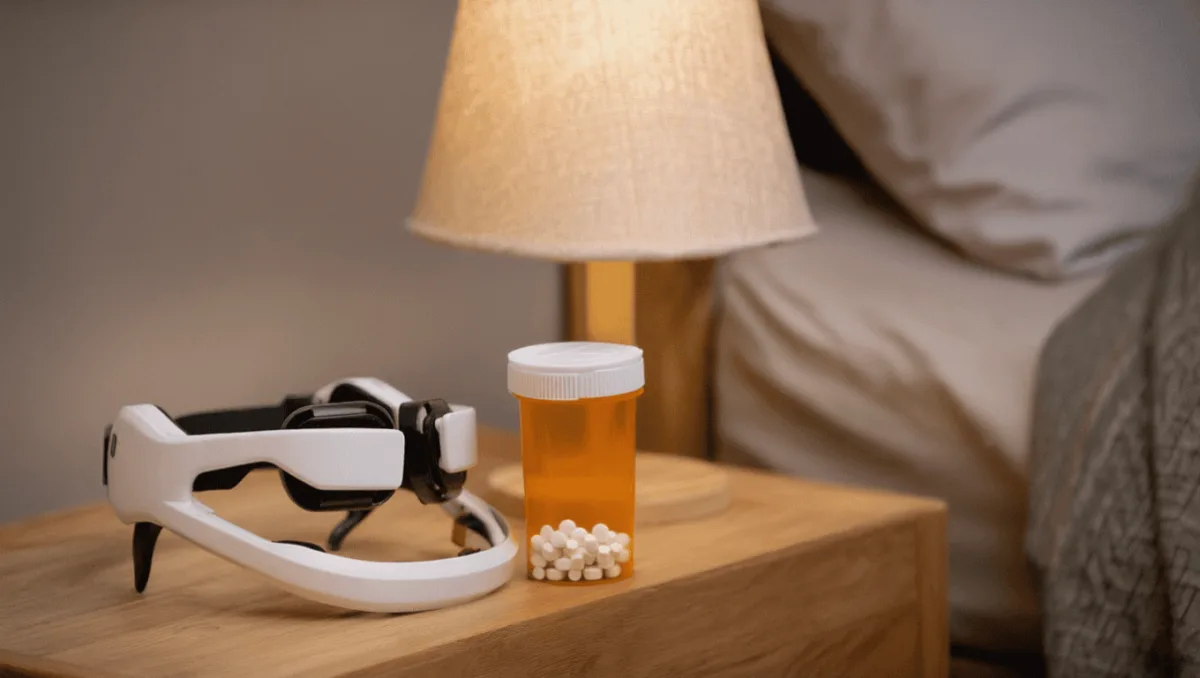
For many years, psychiatric treatment has been framed as a choice: pharmacotherapy or neuromodulation. That framing is no longer scientifically accurate.
Evidence emerging in 2025 suggests that neuromodulation does not operate independently of medication, nor does it simply add an incremental benefit. Instead, it interacts with the neurochemical state of the brain in a state-dependent and non-linear manner, producing effects that exceed either modality alone when appropriately combined.
This shift is not semantic. It reflects a change in how we understand plasticity itself.
Step one: reconsidering the treatment substrate
The brain is an electrochemical system. Neuropsychiatric disorders reflect dysregulation across both domains.
Pharmacological agents primarily modify
- Neurotransmitter availability
- Receptor sensitivity
- Intracellular signaling cascades governing plasticity
Neuromodulation primarily modifies
- Resting membrane potentials
- Neuronal firing probability
- Network synchrony within targeted circuits
When delivered in isolation, each intervention produces partial modulation. When delivered together, they interact at the level of plasticity thresholds and network gain. This interaction, rather than simple addition, is where synergy emerges.
Step two: depression as a model of synergistic plasticity
Ren et al. (2025, JAMA Network Open) provide the most comprehensive clinical evidence for this interaction in Major Depressive Disorder. Across a large meta-analytic dataset:
- Adjunctive neuromodulation increased response odds by over twofold compared to antidepressant treatment alone.
- Effect sizes were meaningfully larger for combination therapy than for neuromodulation monotherapy.
These findings are mechanistically coherent. Antidepressants increase cortical receptivity by reducing inhibitory tone and upregulating plasticity-related pathways such as BDNF. However, they do not impose spatial or network-level specificity. Neuromodulation supplies that specificity by biasing activity within prefrontal–limbic circuits implicated in affect regulation. The result is not redundancy, but directional plasticity.
Step three: dopaminergic systems and network efficiency
A similar interaction is observed in Parkinson's disease. Goede et al. (2025) examined motor outcomes when neuromodulation was paired with stable Levodopa dosing. Motor improvement increased significantly beyond that achieved with medication alone, without dose escalation.
This suggests that neuromodulation enhances the efficiency with which dopaminergic tone is translated into motor network output, rather than merely increasing excitability. Clinically, this reframes the "ceiling effects" seen with pharmacotherapy. In some cases, the limitation may lie not in neurotransmitter availability, but in network-level responsiveness.
Step four: why intensity escalation fails in medicated brains
Leow et al. (2024) introduce a critical constraint to the synergy model. In unmedicated participants, higher stimulation intensities improved motor learning. In the presence of dopaminergic medication, the same intensities impaired acquisition, while lower intensities restored benefit.
This demonstrates that neurotransmitter state alters the neuromodulation dose–response curve. Excessive depolarization in a dopamine-rich cortex likely degrades signal-to-noise ratios, undermining functional plasticity. More current does not equate to more benefit when baseline excitability is already elevated. This has direct relevance for clinical protocol selection.
A unifying interpretation
Across conditions, a consistent principle emerges:
- Medications modulate the capacity for plastic change
- Neuromodulation shapes the expression of that plasticity
- Optimal effects occur within a constrained excitability window
Neuromodulation is therefore neither medication-independent nor intensity-agnostic. Its efficacy depends on alignment with the prevailing neurochemical state.
Clinical implications
- Adjunctive neuromodulation should be considered within stable pharmacotherapy rather than deferred to later stages.
- Escalation of stimulation intensity in medicated patients should be approached cautiously.
- Apparent non-response may reflect neurochemical–electrical mismatch rather than treatment failure.
The clinical task is no longer to choose between modalities, but to coordinate them.
Closing perspective
Psychiatric treatment is transitioning from an additive model to an interaction-based model. When pharmacological priming and electrical modulation are aligned, treatment effects become faster, more reliable, and more durable.
In short
In this context, 1 + 1 is not equal to 2 — it represents a qualitatively different intervention altogether.
Wondering whether ease could help?
ease is prescribed by clinicians. Find one near you, or talk to our team about bringing it into your practice.