At a glance
| Category | Details |
|---|---|
| Patient | RR, 39-year-old woman |
| Condition | Mixed Anxiety and Depression, with Panic Disorder & Tinnitus |
| Duration of struggle | Multiple episodes of Mixed Anxiety & Depression since 2018 |
| Treatment | ease tDCS headband + Cognitive-Emotional Training (CET), twice daily |
| Sessions to remission | 20 sessions |
| Hamilton Depression Rating Scale (HAM-D) | Improved from 27 (severe) to 1 (subclinical) — a 96.3% reduction |
| Hamilton Anxiety Rating Scale (HAM-A) | Improved from 19 (moderate–severe) to 2 (subclinical) — an 89.5% reduction |
The clinical picture
Diagnoses: Mixed Anxiety & Depression, with Panic Disorder and Tinnitus.
Presenting symptoms at assessment (March 2026)
- Persistent anxiety with restlessness and inability to relax
- Difficulty concentrating; decline in occupational functioning
- Disturbed sleep (waking at night with cold sweats, shivering)
- Reduced appetite, loss of interest and enjoyment, decreased socialization
- Recurrent, untriggered panic episodes — dizziness, imbalance, increased heart rate, ringing in ears
- Persistent fear of falling
- Avoidance of outings, family functions, and crowded places
- Escape and safety behaviours during episodes, such as retreating to the washroom at work
History of presenting illness
RR's difficulties first emerged in 2018 following her husband's road accident. She experienced anxiety symptoms including night sweats, shivering, poor sleep, and difficulty concentrating. These symptoms gradually resolved over the following months without formal treatment.
A second episode developed in 2023, marked by anxiety, poor sleep, a persistently elevated heart rate, low mood, and reduced interest in daily activities. Concerned about her physical health, she underwent investigations including an ECG and chest X-ray, both of which were normal. She subsequently consulted a psychiatrist in 2024 and was prescribed medication for approximately six months, resulting in significant improvement.
However, following major family-related stressors in December 2025, she experienced a further relapse. This time, anxiety became centred on dizziness, imbalance, and fear of falling. She began avoiding outings and social situations, withdrew from activities she previously enjoyed, and struggled to attend work regularly. Alongside worsening low mood, she also developed reduced appetite, poor sleep, fatigue, and persistent tinnitus, leading to significant disruption in her daily life.
Given the recurrent nature of her symptoms, the functional impairment caused by anxiety and depression, and the persistence of symptoms despite previous medication treatment, a home-based ease protocol was recommended. This recommendation was to target the brain networks involved in emotional regulation, negative thinking patterns, attention, and behavioural avoidance, with the goal of reducing symptoms and restoring day-to-day functioning.
Treatment protocol
RR completed a home-based treatment programme using ease (tDCS + CET) consisting of twice-daily sessions combining two complementary interventions.
tDCS (transcranial direct current stimulation)
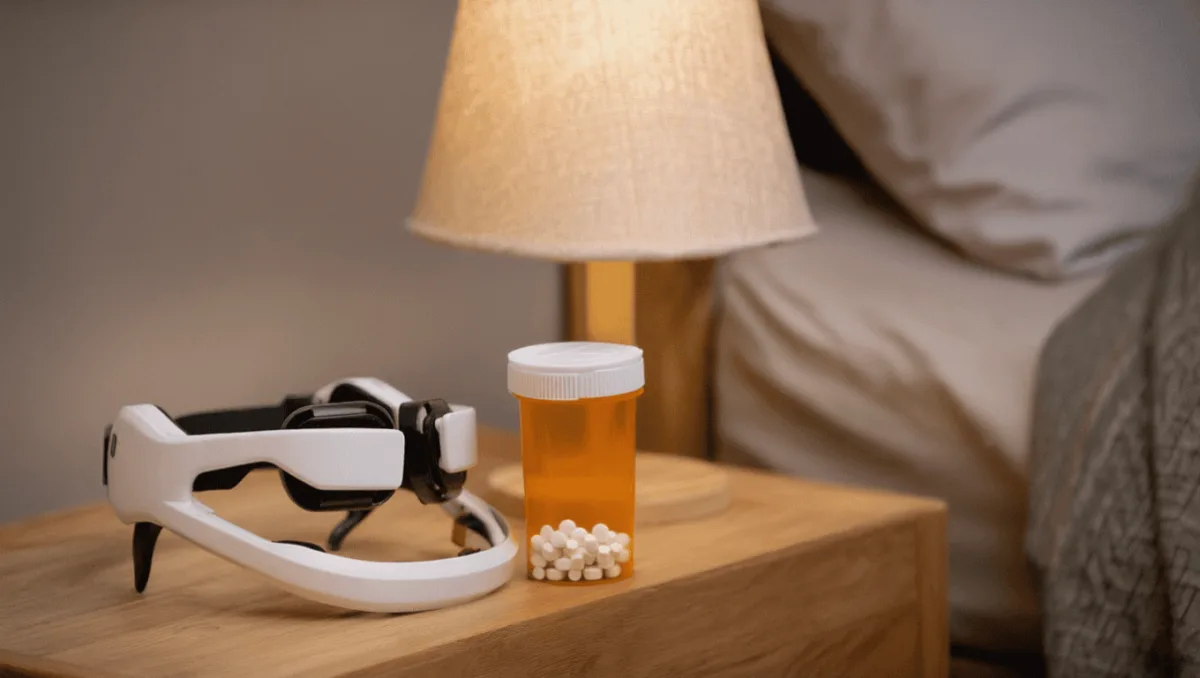
ease is a portable, non-invasive headband that delivers a gentle electrical current to targeted brain regions involved in emotional regulation. Each session lasted 20 minutes and targeted the left dorsolateral prefrontal cortex (DLPFC), an area commonly associated with emotional and cognitive dysregulation in depression and anxiety.
Cognitive-Emotional Training (CET)
Cognitive-Emotional Training was completed simultaneously with tDCS. These tasks or games were designed to engage neural networks involved in attention, emotional processing, cognitive control, and adaptive thinking.
Combining CET with tDCS aims to activate relevant brain circuits while they are being stimulated, potentially enhancing neuroplasticity and supporting more durable therapeutic change.
Outcome measures
RR experienced a rapid and substantial reduction in both depression and anxiety symptoms. Depression scores decreased by 96.3%, while anxiety scores decreased by 89.5%, with both measures reaching the subclinical range.
| Scale | Baseline | Post-treatment | Change |
|---|---|---|---|
| Hamilton Depression Rating Scale (HAM-D) | 27 — severe | 1 — subclinical | ↓ 96.3% |
| Hamilton Anxiety Rating Scale (HAM-A) | 19 — moderate to severe | 2 — subclinical | ↓ 89.5% |
Importantly, the improvement was not limited to questionnaire scores. The changes were reflected in RR's daily life, including her sleep, confidence, ability to work, and participation in family and social activities.
Functional outcomes
- Low mood improved significantly
- Sleeping almost 9 uninterrupted hours per night
- Tinnitus intensity reduced by approximately 50%
- Fear of falling completely resolved
- Returned to work without anxiety-related difficulties
- Started getting engaged in social activities, family functions, and outings
- Regained confidence in managing daily activities independently
Patient story
RR's struggles began in 2018 after her husband was involved in a road accident. The emotional shock triggered a period of anxiety marked by night sweats, shivering, poor sleep, and difficulty concentrating. Although these symptoms eventually faded, they marked the beginning of a recurring pattern.
In 2023, symptoms returned. Poor sleep, a racing heart, anxiety, and low mood gradually began affecting her daily life. Medical investigations found no physical cause, and medication prescribed in 2024 helped her recover.
However, following significant family stress in late 2025, she experienced her most severe relapse. By March 2026, daily life had become increasingly restricted. She was struggling to attend work, avoiding social situations, and constantly worried about dizziness, losing her balance, or falling. Persistent tinnitus added to her distress and further reinforced her focus on physical symptoms. Activities that had once felt routine now felt overwhelming.
After beginning the ease treatment programme, these patterns gradually started to change. Her anxiety reduced, her confidence returned, and she became less focused on dizziness and tinnitus. Sleep improved, energy levels increased, and she felt able to reconnect with work, family, and everyday activities. After just 20 sessions, RR described herself as feeling "happier and better". She had returned to work, resumed social activities, was sleeping soundly through the night, and had regained the confidence to participate fully in daily life once again.
Key takeaway
Despite multiple relapses and significant functional impairment, RR achieved remission of anxiety and depressive symptoms after 20 sessions of ease tDCS combined with Cognitive-Emotional Training, with meaningful improvements in sleep, work functioning, social participation, and quality of life.
Wondering whether ease could help?
ease is prescribed by clinicians. Find one near you, or talk to our team about bringing it into your practice.