
Book a Demo
Postpartum Depression Treatment in India
Safe for New Mothers
Becoming a mother is supposed to be joyful. But for a significant number of women in India, the weeks and months after childbirth bring something very different: persistent sadness, overwhelming anxiety, exhaustion that goes beyond ordinary tiredness, and a disconnection from the baby and the world that is difficult to explain and even harder to admit.
Postpartum depression is not weakness. It is a neurological and hormonal condition and it is treatable. EASE offers a clinically validated, drug-free treatment that is safe during breastfeeding and does not require medications that pass into breast milk.
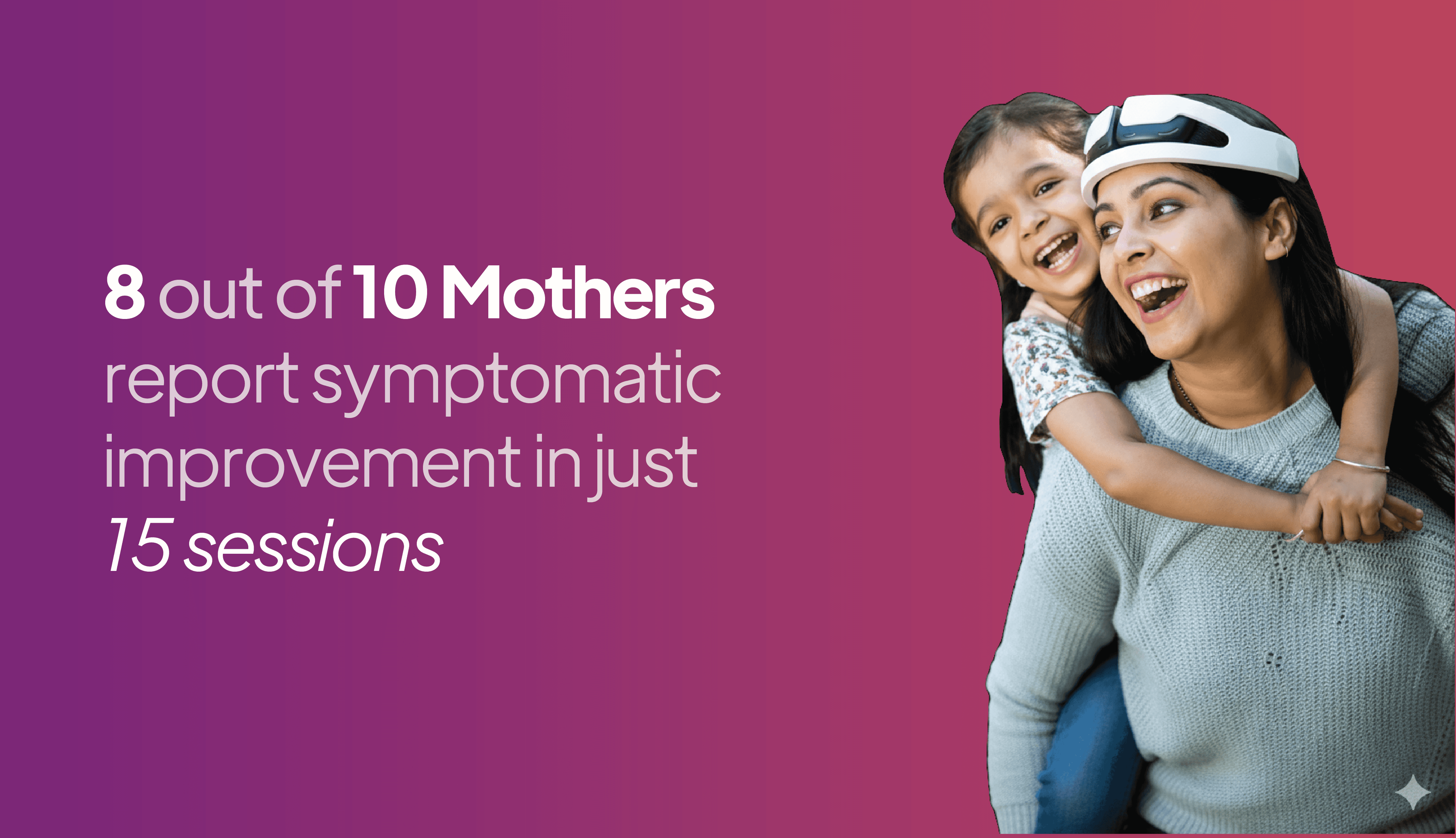
What Postpartum Depression Does to the Brain
Hormonal shifts and prefrontal cortex dysregulation
During and after pregnancy, oestrogen and progesterone levels drop dramatically. These hormones play a significant role in regulating mood and brain function particularly in the prefrontal cortex, which governs emotional regulation, motivation, and cognitive clarity. The rapid withdrawal of these hormones after delivery can trigger a state of prefrontal hypoactivity similar to major depressive disorder but compounded by sleep deprivation, identity changes, and the demands of new parenthood.
The anxiety component why postpartum depression is often misunderstood
For many mothers, postpartum depression does not look like sadness. It looks like constant worry, hypervigilance about the baby's safety, intrusive thoughts, panic, and an inability to rest even when the baby is sleeping. This is because postpartum depression frequently co-occurs with postpartum anxiety and the two conditions share the same neural underpinnings: an overactive amygdala and an underactive prefrontal cortex.
Why Medication Is Complicated During Pregnancy and Breastfeeding
Most antidepressants and anxiolytics cross the placental barrier and pass into breast milk. While some are considered relatively safe, many mothers are understandably reluctant to expose their baby to psychoactive medication, even at low doses. This creates a treatment gap: the mother needs help, but the most commonly prescribed treatments carry risks she is not willing to accept.
EASE closes this gap. The device delivers a low electrical current to the scalp only it does not enter the bloodstream, cross the placenta, or appear in breast milk. It is a genuinely non-pharmacological treatment with no systemic effects.
How EASE Provides Safe, Drug-Free Relief
EASE applies gentle tDCS stimulation to the left DLPFC restoring activity in the brain regions that regulate mood, motivation, and emotional resilience. EEG sensors monitor the brain's response to treatment in real time, allowing the doctor to personalise the protocol. CET exercises strengthen the cognitive and emotional capacities that postpartum depression depletes: concentration, emotional regulation, and the capacity to experience positive emotions.
The UK's NHS perinatal mental health services have used tDCS-based treatment (via Flow Neuroscience) with mothers in perinatal crisis care reporting significant improvements and strong patient acceptance. EASE brings this approach to India with the additional advantage of EEG monitoring and CET, making it a more comprehensive system.
Case Study
Rapid Relief in Early Pregnancy
Dr. Akhand Pratap Singh
A clinical case study documented by Dr. Akhand Pratap Singh within the EASE network presented a patient in early pregnancy experiencing persistent anxiety, physiological restlessness, palpitations, poor sleep, irritability, and reduced concentration. Standard pharmacological options were not appropriate given the pregnancy.
Following a course of tDCS + CET sessions with EASE, the patient reported rapid and significant symptom relief with improvements in sleep quality, reduced anxiety, and improved concentration appearing within the first 10 sessions. No adverse effects were observed.
See the full case study →
Find a Doctor Near You
EASE is available through a network of 40+ partner hospitals and psychiatrists across India. To find a doctor in your city who offers EASE treatment, visit our doctor directory.
Or fill in our patient form and we will connect you with the right specialist
Frequently Asked Questions
Is EASE safe while breastfeeding?
Can EASE be used during pregnancy?
How soon after delivery can I start EASE treatment?
Does EASE also help with postpartum anxiety?