
Case Study
Neuromodulation
Breaking the Cycle: tDCS Acceptability Transforms Anxiety Treatment in a 76-Year-Old
TL;DR
Challenges
76-year-old Maninder rejected meds due to medication phobia, trapping him in severe anxiety and insomnia.
Solution
Home-based tDCS via EASE headband + Cognitive-Emotional Training (CET) - stigma-free, non-invasive, no pills.
Results
45% drop in HAM-A score (31 → 17), better sleep, sustained stability post-treatment. Zero adverse events.
Why it works
High acceptability for geriatric patients with poor insight into mental illness.
Before: A Vicious Cycle of Fear and Fragmented Sleep
At 76, Maninder's days blurred into exhaustion. Nights offered no relief - just fragmented sleep, interrupted by nameless unease, chest tension, and relentless restlessness. His mind raced; his body stayed wired.
He dismissed it as "not mental." Like many seniors, he viewed anxiety as weakness, not illness. Medications? Pills spiked his fear of side effects and dependence, worsening symptoms before they helped. His world shrank as poor sleep fueled anxiety, and vice versa. Exhausted and out of options, he needed a path he could accept.
The Turning Point: A Stigma-Free Alternative
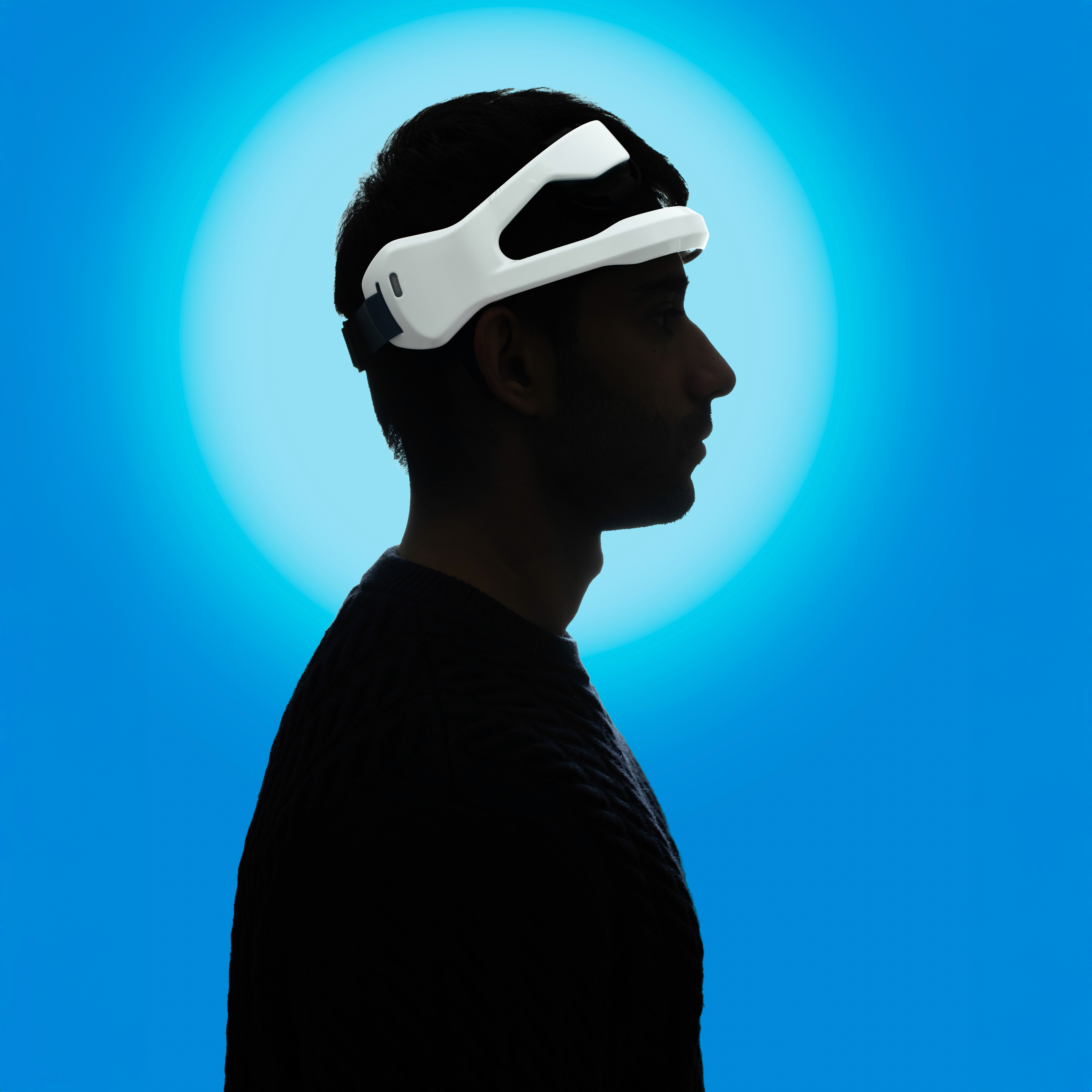
Dr. Jwalant Chag shifted the conversation. No prescriptions - just understanding Maninder's fears. He introduced the EASE headband: a simple, wearable tDCS device for home use. Non-invasive, drug-free, short sessions (20 min/day). No "anxiety treatment" label to trigger resistance.
Maninder's doubts eased with reassurance: mild sensation only, no pain, home-based privacy. It felt physical and practical, aligning with his beliefs. Cautiously, he agreed - his first tolerable option in years.
During Treatment: Subtle Shifts Build Momentum
Daily 20-min sessions fit seamlessly: wear the headband at home, pair with CET "brain games" like emotional N-Back or Go/No-Go tasks. No pain, just mild awareness.
Changes crept in gradually. Daytime tension faded; restlessness eased. Nights lengthened and deepened. No side effects meant no fear - each session boosted quiet confidence. Anxiety softened; clarity returned. Effortless progress replaced fragility.
After: Stability Without Rebound
Post-20 sessions, transformation solidified. Sleep stabilized; daily anxiety dulled. No adverse effects, no dependence - gains held steady. Maninder thrived, unburdened.
He reflected: "Geriatric patients often lack insight into anxiety. With comorbidities, this 'headband' relaxes the body without stigma."
Clinical Details: Protocol and Evidence
Post-20 sessions, transformation solidified. Sleep stabilized; daily anxiety dulled. No adverse effects, no dependence - gains held steady. Maninder thrived, unburdened.
He reflected: "Geriatric patients often lack insight into anxiety. With comorbidities, this 'headband' relaxes the body without stigma."
Rationale
Targeting the DLPFC is the standard approach for affective‑cognitive regulation in depression and anxiety treatments Ruffini et al., 2024, Woodham et al., 2024; CET enhances plasticity Gough et al., 2020, Iacoviello et al., 2015.
Montage
Anode F3 (left DLPFC), cathode F4; 1.5–2 mA, 20 min/day x 20 sessions.
Outcomes
HAM-A 31 → 17 (45% reduction); improved sleep (qualitative). Matches trial data on tDCS for anxiety/insomnia.
Implications
Ideal for med-intolerant geriatrics - home-based, adherent, stigma-free.
Sources
Woodham, R.D., Selvaraj, S., Lajmi, N. et al. Home-based transcranial direct current stimulation treatment for major depressive disorder: a fully remote phase 2 randomized sham-controlled trial. Nat Med 31, 87–95 (2025). https://doi.org/10.1038/s41591-024-03305-y
Ruffini, G., Salvador, R., Castaldo, F., Baleeiro, T., Camprodon, J. A., Chopra, M., Cappon, D., & Pascual-Leone, A. (2024). Multichannel tDCS with advanced targeting for major depressive disorder: a tele-supervised at-home pilot study. Frontiers in Psychiatry, 15, 1427365. https://doi.org/10.3389/fpsyt.2024.1427365
Iacoviello, B., & Charney, D. (2014). Developing cognitive-emotional training exercises as interventions for mood and anxiety disorders. European Psychiatry, 30(1), 75–81. https://doi.org/10.1016/j.eurpsy.2014.09.415.
Gough, N., Brkan, L., Subramaniam, P., Chiuccariello, L., De Petrillo, A., Mulsant, B. H., Bowie, C. R., & Rajji, T. K. (2020). Feasibility of remotely supervised transcranial direct current stimulation and cognitive remediation: A systematic review. PLoS ONE, 15(2), e0223029. https://doi.org/10.1371/journal.pone.0223029.

Inspiration






Latest posts


For decades, progress has been measured in speed, automation, and connectivity. Screens became smaller, faster, and more powerful. Life moved online.

Autonomous driving has long been framed as a near-future inevitability—a moment when human drivers quietly step aside and let machines take over.